
Skip to the end of the images gallery Nav bascule
Skip to the beginning of the images gallery Nav bascule
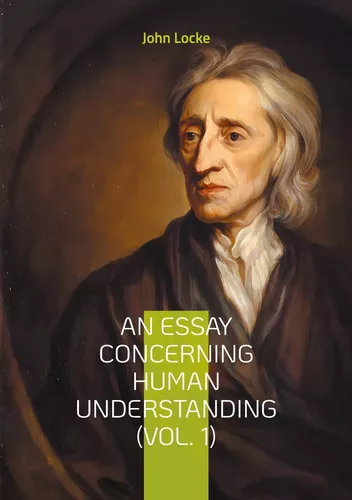
An Essay Concerning Human Understanding (Vol. 1)
Exploring Empiricism and the Philosophy of Mind by John Locke
ePUB
834,9 KB
DRM : filigrane
ISBN : 9782322514052
Éditeur : BoD - Books on Demand
Date de parution : 21.08.2024
Langue : anglais
Accessibilité: Accès limité
Disponible en :
6,99 €
TVA incluse
Téléchargement disponible dès maintenant
Votre propre livre !
Devenez auteur avec BoD et vendez votre livre et votre ebook en librairie.
En savoir plusAn Essay Concerning Human Understanding by John Locke is a foundational text in the philosophy of empiricism, exploring the nature of human knowledge and the mind. Published in 1689, this Enlightenment masterpiece challenges the notion of innate ideas, proposing instead that the mind begins as a "tabula rasa" or blank slate, shaped by experience.
Locke meticulously dissects the formation of ideas, distinguishing between simple ideas derived from sensory experience and complex ideas constructed by the mind. He examines primary and secondary qualities, emphasizing that our perception of the world is mediated by these qualities.
Locke's exploration of personal identity introduces a psychological criterion, laying the groundwork for modern discussions on self and consciousness. The essay also delves into language, knowledge, and belief, offering insights into intuition, mathematics, and moral philosophy.
An Essay Concerning Human Understanding remains a pivotal work in the categories of Philosophy, Epistemology, and Enlightenment Studies, influencing thinkers like David Hume and George Berkeley. Locke's clear and methodical approach invites readers to reconsider the origins and limits of human understanding.
Locke meticulously dissects the formation of ideas, distinguishing between simple ideas derived from sensory experience and complex ideas constructed by the mind. He examines primary and secondary qualities, emphasizing that our perception of the world is mediated by these qualities.
Locke's exploration of personal identity introduces a psychological criterion, laying the groundwork for modern discussions on self and consciousness. The essay also delves into language, knowledge, and belief, offering insights into intuition, mathematics, and moral philosophy.
An Essay Concerning Human Understanding remains a pivotal work in the categories of Philosophy, Epistemology, and Enlightenment Studies, influencing thinkers like David Hume and George Berkeley. Locke's clear and methodical approach invites readers to reconsider the origins and limits of human understanding.

Rédigez votre propre commentaire



Il n'y a pour le moment pas de critique presse.