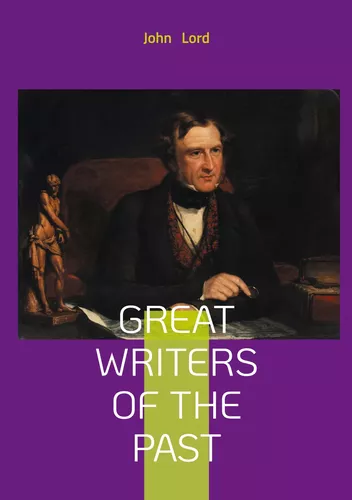
John Lords Great Writers of the Past offers a penetrating exploration of the literary giants who shaped Western thought and culture. This meticulously researched volume examines the lives and works of seminal figures such as Dante, Shakespeare, Milton, Voltaire, Carlyle, and Emerson, weaving their contributions into a cohesive narrative of intellectual evolution. Lords analysis transcends mere biography, delving into how these writers reflected and influenced their eras, from the Renaissances rebirth of classical ideals to the Enlightenments championing of reason.
The book highlights Dantes Divine Comedy as a bridge between medieval theology and humanist expression, while Shakespeares plays are framed as timeless studies of human nature. Miltons Paradise Lost is dissected for its theological depth and political undertones, and Voltaires satirical genius is contextualized within his battles against censorship. Lord also illuminates Carlyles role in redefining historical writing and Emersons transcendentalist vision, which reshaped American identity.
Rich in historical analysis, the text connects literary achievements to broader societal shifts, such as the rise of democracy and secularism. It situates itself within categories like Literary Criticism, Historical Biographies, and Intellectual History, appealing to readers seeking both scholarly depth and accessible prose. Lords crisp narrative avoids jargon, making complex ideas approachable without sacrificing rigor.
The inclusion of lesser-known essays by contemporaries like Macaulay and Emerson adds layers of critique and admiration, offering a multifaceted view of each writers legacy. By blending biographical insights with cultural impact, this work serves as a gateway to understanding how literature mirrors and molds civilization.
John Lord (1810.1894) was a renowned American historian and lecturer whose works bridged academic scholarship and public education. Best known for his Beacon Lights of History series, Lord dedicated his career to making complex historical and literary themes accessible to a broad audience. Trained at Dartmouth College and Andover Theological Seminary, he initially pursued ministry but shifted to writing and lecturing, driven by a passion for elucidating the interconnectedness of ideas across eras.
His lectures, delivered across the United States during the 19th century, combined narrative flair with rigorous research, earning him acclaim as a master storyteller of intellectual history. Great Writers of the Past exemplifies his method of contextualizing individual genius within societal transformations, a approach that influenced later historians and educators.
Lords works often emphasized the moral and philosophical dimensions of history, reflecting his belief that literature and thought were catalysts for progress. Despite his focus on Western figures, his writings occasionally ventured into comparative analysis, noting parallels between European and Eastern traditions.
Posthumously completed by collaborators, his final volumes, including this exploration of literary giants, cemented his reputation as a pivotal figure in 19th century historiography. Today, his books remain valued for their clarity, depth, and ability to inspire curiosity about the forces that shape human achievement.









Il n'y a pour le moment pas de critique presse.