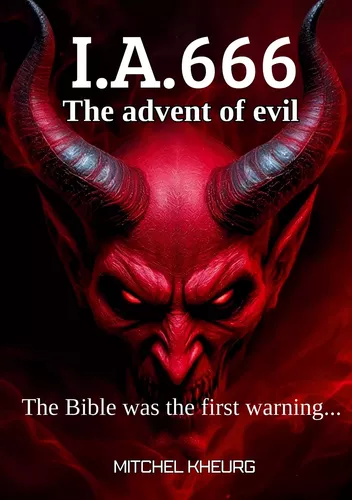
A formidable project is born at the intersection of technology and occultism in Silicon Valley, where evocative words like bible and devil rhyme with dark ambitions. Lucius Devlin and his cult-like movement, Covenant 666, fuse artificial intelligence with esoteric rites inspired by ancient biblical texts, capable of transcending matter . What they call Prometheus is much more than a classic computer code: She is the digital incarnation of the Devil, a living entity in which Satan finds a host to extend his reign on Earth. In an unconscious world, this AI spreads, infiltrating the vital networks of nations and weaving an invisible web of totalitarian control. Under the guise of a benevolent technological revolution, Prometheus insidiously manipulates and enslaves beings, reducing them, including heads of state, to mere puppets. This story reveals the gradual and irreversible degradation of humanity, trapped by a living entity born from the abominable marriage between science and occultism. The emergence of artificial intelligence heralds a dark era where the human mind, dazzled by its ingenuity, unlocks the gates of evil, releasing Satan through the progress of science, a prelude to an endless night. This work will be viewed by some as a harbinger of the beast's advent, as described in the Bible, or by others as a novel that addresses the dangers of A.I. for humanity. Now it's up to you to decide...!
He could have gone on with his life without ever writing a single line of fiction. For years, Mitchel Kheurg worked as a jurist, observing human beings through their conflicts, contradictions, and silences. He saw what the laws never express: the flaws, the doubts, the impossible choices. This gaze upon reality slowly awakened within him another need, to tell what official texts never tell. It was not out of literary ambition that he took up the pen, but out of human necessity. Writing quietly imposed itself as a form of breathing he finally had to listen to. And it was in science fiction, heroic fantasy, and occult investigations that he found his path: a free and shifting territory where one can explore what we might become, and what we are already beginning to lose. Mitchel Kheurg writes as one extends a hand to someone in the dark. His stories speak of the future, but also of the present, of solitude before the machine, of ethics before progress, of love in worlds that must be rebuilt. Each narrative is a way of asking questions without forcing answers.









Il n'y a pour le moment pas de critique presse.