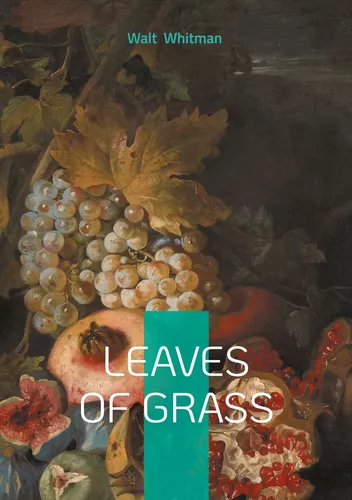
Leaves of Grass by Walt Whitman stands as a foundational work of American poetry, revolutionary in both form and ambition. First published in 1855, this collection of poems embodies the spirit of democracy, freedom, and modernity, while celebrating nature, the human body, and individual experience. Whitman invents a unique poetic language, breaking away from the literary conventions of his time, to sing of the beauty of everyday life, the diversity of beings, and the richness of the world.
Each poem in Leaves of Grass invites readers on a journey of self-discovery and exploration of the world. Whitman exalts sensuality, individuality, and the power of life, while exploring universal themes such as love, death, fraternity, and the search for meaning. His poetry, both lyrical and epic, is distinguished by vital energy, openness to others, and a celebration of the human condition in all its forms.
This book is for anyone interested in American poetry, literary modernity, or humanism. It offers a profound reflection on freedom, democracy, and the place of the individual in society, while nourishing readers' imaginations with its bold and visionary style. Book categories such as American poetry, travel literature, and essays on modernity are naturally highlighted in this essential work.
Walt Whitman (1819.1892) is widely recognized as one of the most influential poets in American literature and a central figure in the emergence of modern poetry. Born on Long Island, Whitman worked as a journalist, printer, and teacher before publishing Leaves of Grass, a collection that revolutionized English-language poetry with its free verse and expansive vision of democracy, nature, and human experience.
Whitman became known as the bard of democracy, celebrating individual freedom, the beauty of the human body, and the diversity of American life. His poetry, both lyrical and epic, is marked by a vital energy, an openness to others, and a celebration of the human condition in all its forms. His work deeply influenced American and global literature, inspiring generations of writers and thinkers.
Whitman legacy endures as a reference for those interested in American poetry, modernity, and humanism. His writings, translated into many languages, continue to resonate with readers seeking to understand freedom, individuality, and the power of poetry to transform the world.









Il n'y a pour le moment pas de critique presse.