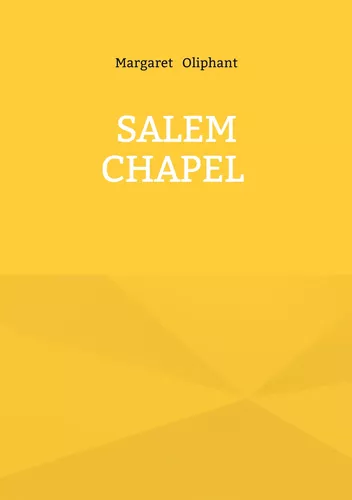
« Salem Chapel » by Margaret Oliphant immerses readers in the dissenting community of Carlingford, where the young minister Arthur Vincent takes charge of the chapel following his predecessor's retirement. Arrogant and idealistic, Vincent faces the political realities of his merchant congregation, torn between his spiritual ambitions and the practical expectations of his flock.
The plot intensifies when Vincent's sister disappears, triggering a labyrinthine investigation involving family mystery, betrayal, and social scandal. Oliphant weaves a sharp critique of bourgeois hypocrisy and religious tensions in Victorian England, exposing the conflicts between the Established Church and the Dissenters. Through Vincent's journey, the novel explores themes of honor, gender roles, and shattered illusions, while offering a nuanced portrait of Carlingford's micro society.
This work is part of the Chronicles of Carlingford, a landmark series in Victorian literature and social satire, providing enduring insights into community dynamics and moral struggles. The narrative stands out for its psychological depth and its subtle, ironic depiction of provincial life, making it a compelling read for those interested in Victorian novels, religious dissent, and the complexities of chapel communities.
Margaret Oliphant (1828.1897) was a prolific Scottish writer who published more than one hundred works despite a life marked by family loss. Her Chronicles of Carlingford, including « Salem Chapel », explore religious conflicts and social hierarchies in provincial England with biting irony. A regular contributor to Blackwoods Magazine, she combined domestic realism with social critique, anticipating modern feminist themes.
Rediscovered for her psychological insight, Oliphant became a leading voice for women in a rigid society. Her legacy endures as a pillar of Victorian literature and a sharp observer of bourgeois manners. Her writing continues to resonate with readers drawn to Victorian novels, religious dissent, chapel communities, and social satire.








Il n'y a pour le moment pas de critique presse.