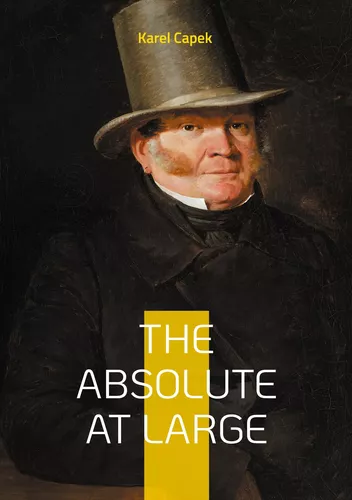
« The Absolute at Large » by Karel Capek is a visionary novel that blends science fiction with sharp social satire and philosophical inquiry. Set in the early 20th century, the story begins when a brilliant inventor creates the Karburator, a revolutionary device that can extract limitless energy from matter. However, the process releases not only energy but also the Absolute a mystical, omnipresent force that permeates the world and inspires religious fervor and moral zealotry.
As the Karburator spreads across the globe, society is transformed by the Absolute. People become obsessed with spiritual purity, forming sects and crusades, while industrial and political systems collapse under the weight of newfound idealism. The narrative follows a wide cast of characters, from industrialists and politicians to ordinary citizens, all caught in the chaos of a world where technology, religion, and philosophy collide.
Capek uses this premise to explore themes of mass production, the dangers of unchecked technological progress, and the complexities of human nature. The novel is both a warning about the unintended consequences of innovation and a humorous critique of human folly. With its blend of speculative fiction, dystopian elements, and witty commentary, « The Absolute at Large » stands as a classic of Czech literature and a thought-provoking work for readers interested in science fiction, satire, and philosophical fiction.
Karel Capek (1890.1938) was a Czech writer, playwright, and journalist whose inventive works have left a lasting mark on world literature. Born in Malé Svatonovice, he studied philosophy and aesthetics before embarking on a career that blended science fiction, satire, and philosophical reflection. Capek is perhaps best known for coining the term robot in his play « R.U.R. », but his novels and essays explore a wide range of themes, from technology and ethics to the absurdities of modern life.
« The Absolute at Large » exemplifies Capeks talent for merging science fiction with social critique, using humor and imagination to question the impact of technology and ideology on humanity. Throughout his career, Capek addressed the dangers of totalitarianism, the dehumanizing effects of industrialization, and the search for meaning in a rapidly changing world. His clear, witty prose and deep philosophical insights make his works accessible to readers of all backgrounds.
Capek legacy endures as a pioneer of speculative fiction and a keen observer of human nature. His ability to combine science fiction, satire, and philosophical inquiry continues to inspire writers and thinkers around the globe.









Il n'y a pour le moment pas de critique presse.