
Skip to the end of the images gallery Nav bascule
Skip to the beginning of the images gallery Nav bascule
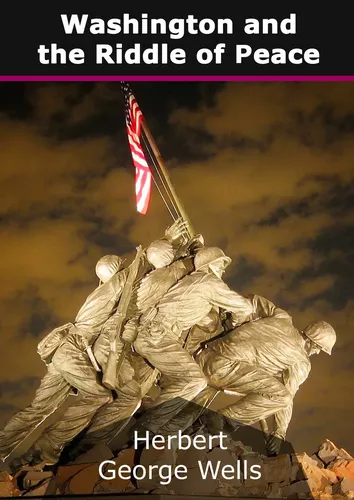
Washington and the Riddle of Peace
ePUB
701,4 KB
DRM : filigrane
ISBN : 9782322171521
Éditeur : Books on Demand
Date de parution : 27.03.2019
Langue : anglais
Accessibilité: Accès limité
2,49 €
TVA incluse
Téléchargement disponible dès maintenant
Votre propre livre !
Devenez auteur avec BoD et vendez votre livre et votre ebook en librairie.
En savoir plusThis fate is not threatening civilization; it is happening to civilization before our eyes. The ship of civilization is not going to sink in five years' time or in fifty years' time. It is sinking now. -from "The Immensity of the Issue and the Triviality of Man" In the wake of World War I, the victor nations came together to shape the postwar era... and in doing so, laid the ground for the next great war.
That was already obvious in 1921, when H. G. Wells gathered in one volume his essays for the New York World, the Chicago Tribune, and other American and European newspapers written in reaction to what he saw and heard at the Washington Conference to organize the peace. Though known, along with Jules Verne, as one of the 19th-century fathers of science fiction, here Wells explores more down-to-earth issues, from the "problem" of Russia and Japan-and how little could hope to be accomplished at this conference without their participation-to the "economic decadence" of the world and how to arrest it.
Wells' intriguing foresight shines through, making this a fascinating document of the international disaster of the World Wars. British author HERBERT GEORGE WELLS (1866-1946) is best known for his groundbreaking science fiction novels The Time Machine (1895), The Invisible Man (1897), and The War of the Worlds (1898). ALSO FROM COSIMO: Wells's God the Invisible King, A Short History of the World, and The Soul of a Bishop
That was already obvious in 1921, when H. G. Wells gathered in one volume his essays for the New York World, the Chicago Tribune, and other American and European newspapers written in reaction to what he saw and heard at the Washington Conference to organize the peace. Though known, along with Jules Verne, as one of the 19th-century fathers of science fiction, here Wells explores more down-to-earth issues, from the "problem" of Russia and Japan-and how little could hope to be accomplished at this conference without their participation-to the "economic decadence" of the world and how to arrest it.
Wells' intriguing foresight shines through, making this a fascinating document of the international disaster of the World Wars. British author HERBERT GEORGE WELLS (1866-1946) is best known for his groundbreaking science fiction novels The Time Machine (1895), The Invisible Man (1897), and The War of the Worlds (1898). ALSO FROM COSIMO: Wells's God the Invisible King, A Short History of the World, and The Soul of a Bishop

Rédigez votre propre commentaire



Il n'y a pour le moment pas de critique presse.