
Skip to the end of the images gallery Nav bascule
Skip to the beginning of the images gallery Nav bascule
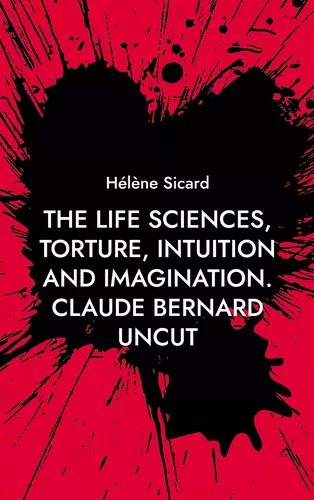
The Life Sciences, Torture, Intuition and Imagination.
Claude Bernard Uncut
ePUB
710,9 KB
DRM : filigrane
ISBN : 9782322633104
Éditeur : BoD - Books on Demand
Date de parution : 29.03.2026
Langue : anglais
Accessibilité: Entièrement accessible
Disponible en :
5,49 €
TVA incluse
Téléchargement disponible dès maintenant
Votre propre livre !
Devenez auteur avec BoD et vendez votre livre et votre ebook en librairie.
En savoir plusFocused on the life and work of the founder of modern experimental medicine, namely nineteenth-century French physiologist and playwright Claude Bernard, this essay gives its readers reasonable ground to consider the institutionalization of the experimental method as sole method of scientific inquiry in the life sciences as being perhaps one of the greatest deceptions in the history of modern medicine.
As a matter of fact, the author's non-selective reading of Bernard's scientific writings reveals that the latter dismissed scientific experimentation on the living, which he called "vivisection," because it was "torture," in his own word, and because it could easily be avoided, since human beings can rely on soft, self-sufficient means of accessing knowledge such as intuition, imagination and dreams, according to him.
Sicard's essay attempts to make sense of Bernard's enigmatic choice to carry out experiments anyway, which he considered as a form of creative writing, while striving to understand why violence, and specifically torture, persists in most areas of human activity in today's society.
As a matter of fact, the author's non-selective reading of Bernard's scientific writings reveals that the latter dismissed scientific experimentation on the living, which he called "vivisection," because it was "torture," in his own word, and because it could easily be avoided, since human beings can rely on soft, self-sufficient means of accessing knowledge such as intuition, imagination and dreams, according to him.
Sicard's essay attempts to make sense of Bernard's enigmatic choice to carry out experiments anyway, which he considered as a form of creative writing, while striving to understand why violence, and specifically torture, persists in most areas of human activity in today's society.

Rédigez votre propre commentaire



Il n'y a pour le moment pas de critique presse.